nandi's blog

Dinosaurs Were Thriving Before Asteroid Strike That Wiped Them Out
Thursday, March 7, 2019

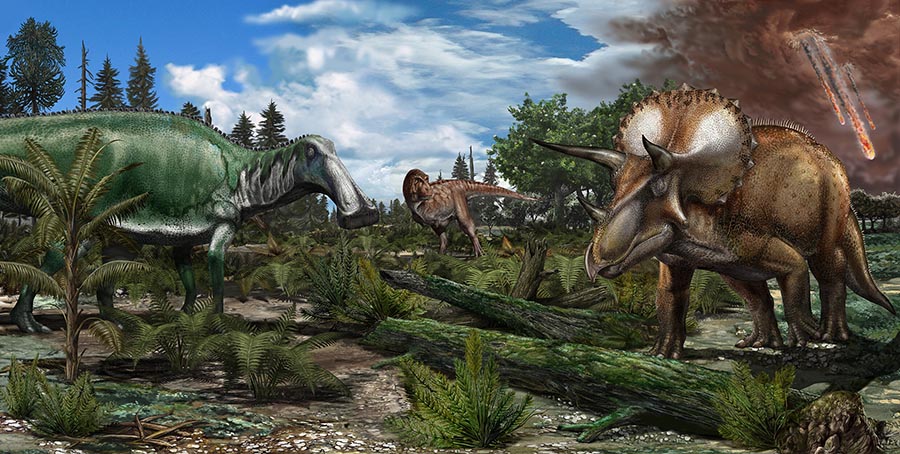
Reconstruction of a late Maastrichtian (~66 million years ago) palaeoenvironment in North America, where a floodplain is roamed by dinosaurs like Tyrannosaurus rex, Edmontosaurus and Triceratops. Credit: Davide Bonadonna

Dinosaurs were unaffected by long-term climate changes and flourished before their sudden demise by asteroid strike.

Scientists largely agree that an asteroid impact, possibly coupled with intense volcanic activity, wiped out the dinosaurs at the end of the Cretaceous Period 66 million years ago.

However, there is debate about whether dinosaurs were flourishing before this, or whether they had been in decline due to long-term changes in climate over millions of years.

Previously, researchers used the fossil record and some mathematical predictions to suggest dinosaurs may have already been in decline, with the number and diversity of species falling before the asteroid impact.

Now, in a new analysis that models the changing environment and dinosaur species distribution in North America, researchers from Imperial College London, University College London and University of Bristol have shown that dinosaurs were likely not in decline before the meteorite.

Lead researcher Alessandro Chiarenza, a Ph.D. student in the Department of Earth Science and Engineering at Imperial, said: "Dinosaurs were likely not doomed to extinction until the end of the Cretaceous, when the asteroid hit, declaring the end of their reign and leaving the planet to animals like mammals, lizards and a minor group of surviving dinosaurs: birds.

"The results of our study suggest that dinosaurs as a whole were adaptable animals, capable of coping with the environmental changes and climatic fluctuations that happened during the last few million years of the Late Cretaceous. Climate change over prolonged time scales did not cause a long-term decline of dinosaurs through the last stages of this period."

The study, published today in Nature Communications, shows how the changing conditions for fossilisation means previous analyses have underestimated the number of species at the end of the Cretaceous.

The team focused their study on North America, where many Late Cretaceous dinosaurs are preserved, such as Tyrannosaurus rex and Triceratops. During this period, the continent was split in two by a large inland sea.
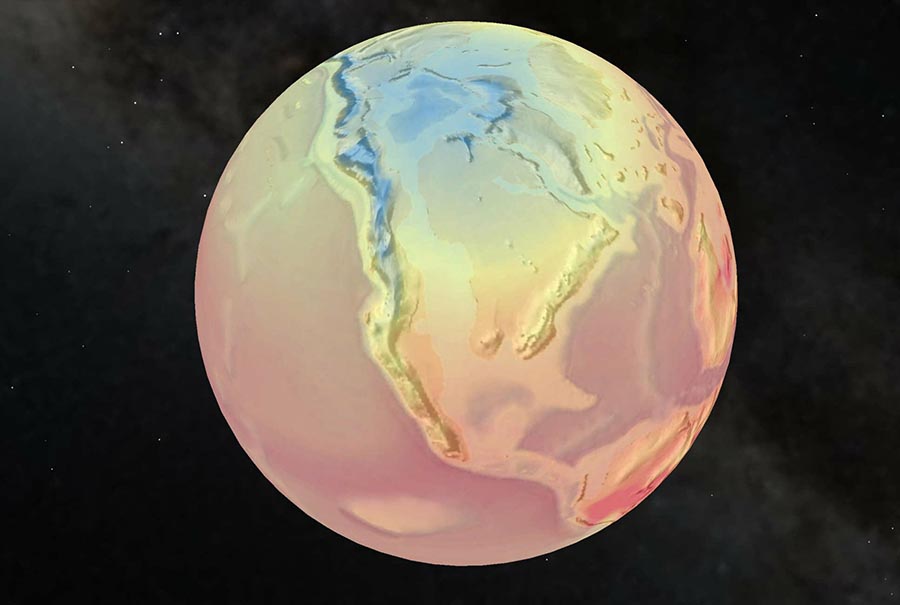
A global map showing the distribution of surface temperature over the Earth in the Late Cretaceous, .76 million years ago. Warmer colours represent higher temperatures, while colder colours indicate lower ones. Credit: Alfio Alessandro Chiarenza/ BRIDGE University of Bristol/ GETECH

In the western half there was a steady supply of sediment from the newly forming Rocky Mountains, which created perfect conditions for fossilising dinosaurs once they died. The eastern half of the continent was instead characterised by conditions far less suitable for fossilisation.

This means that far more dinosaur fossils are found in the western half, and it is this fossil record that is often used to suggest dinosaurs were in decline for the few million years before the asteroid strike.

Co-author Dr. Philip Mannion, from University College London, commented: "Most of what we know about Late Cretaceous North American dinosaurs comes from an area smaller than one-third of the present-day continent, and yet we know that dinosaurs roamed all across North America, from Alaska to New Jersey and down to Mexico."

Instead of using this known record exclusively, the team employed 'ecological niche modelling'. This approach models which environmental conditions, such as temperature and rainfall, each species needs to survive.

The team then mapped where these conditions would occur both across the continent and over time. This allowed them to create a picture of where groups of dinosaur species could survive as conditions changed, rather than just where their fossils had been found.

The team found habitats that could support a range of dinosaur groups were actually more widespread at the end of the Cretaceous, but that these were in areas less likely to preserve fossils.

Furthermore, these potentially dinosaur-rich areas were smaller wherever they occurred, again reducing the likelihood of finding a fossil from each of these areas.

'Ecological niche modelling does not support climatically-driven dinosaur diversity decline before the Cretaceous/Paleogene mass extinction' by Alfio Alessandro Chiarenza, Philip D. Mannion, Daniel J. Lunt, Alex Farnsworth, Lewis A. Jones, Sarah-Jane Kelland & Peter A. Allison is published in Nature Communications.

More information: Nature Communications (2019). DOI: 10.1038/s41467-019-08997-2 

Journal reference: Nature Communications

Provided by: Imperial College London

Source: https://phys.org

Paleontologists Uncover Hundreds of Fossils Near Beverly Hills

Tuesday, March 5, 2019

Metro officials and paleontologists presented their findings today at the La Brea Tarpits.

Metro’s purple line expansion leads to Ice Age fossil discoveries. The fossils found include remains of giant ground sloths, mammoths and bisons.

The expansion of Los Angeles' Metro purple line has unearthed over 500 fossils, including some from the Ice Age. Paleontologists and Metro officials showed off their newly acquired artifacts today at the La Brea Tar Pits.

Metro's construction, which plans to add seven stops and nine miles of rail to the purple line from Koreatown to West LA, has given paleontologists a better look at what life may have been like some 10,000 years ago.

"We had an idea that we would find some fossils," said Kasey Shuda, the senior manager of construction relations for the purple line expansion. "That's why we made sure there were paleontologists in our environmental report."

The paleontological field director for Cogstone Resource Management, Ashley Leger, said the discovery teaches us about the history of the area.

"It's interesting to get a glance outside of the tar pits and see what the rest of Los Angeles and Southern California was like," Leger said. "We learn so much about the Ice Age just from the fossils being found."

The discovered fossils will all go on display at the Los Angeles National History Museum. The fossils discovered include giant ground sloths, mammoths and bison. The most rare discovery was the "Hayden" fossil, a nearly complete skull of a juvenile Columbian Mammoth, which was found at the Wilshire/La Brea stop in section one.

In order to ensure that fossils are not carelessly damaged during excavation, a team of monitors  are on the ground and underground, when construction is taking place.

"Anytime there is active excavation, some of our staff is there on hand watching the sediment move," field director Ashley Leger said. "When anything is found they can immediately retrieve it."

When a fossil is found the excavation team is able to dynamically divert work to another section of the subway, so that production isn't completely halted.

The excavation of section one is nearly completed and work on section two is expected to begin soon. The entire expansion project is expected to be completed in 2026.

Source: www.uscannenbergmedia.com

Megalodon’s Teeth Evolved Over 12 Millions Years, Researchers Find

Thursday, March 7, 2019

Teeth are the only reliably identifiable fossils from Carcharocles megalodon. They’re also damn huge. Image credits Kristen Grace / Florida Museum of Natural History.

These “ultimate cutting tools” were a long time in the making.

The teeth of Megalodon (Carcharocles megalodon), the largest shark ever to prowl the oceans, look like daggers. They’re up to 7 inches (18 cm) long and shaped like blades. But it took them millions of years to evolve into their final shape, new research reveals. The findings created more questions than they answered, as we still don’t know why the process took so long or why it started in the first place.

Big fish, bigger bite

“This transition was a very long, drawn-out process, eventually resulting in the perfect cutting tool — a broad, flat tooth with uniform serrations,” said study lead author Victor Perez, a doctoral student in geology at the Florida Museum of Natural History.

“It’s not yet clear why this process took millions of years and why this feature [serration] was lost.”

Megalodon has to be one of the most awe-inspiring and mysterious animals out there. It was the largest shark ever seen on Earth, but the only trace they’ve left is their teeth. Which is quite fitting for a shark.

But these teeth, according to Perez’s team, evolved over 12 million years. The researchers analyzed the evolutionary path of megalodon teeth and those of its immediate ancestor, Carcharocles chubutensis. Their study revealed a surprisingly slow and gradual process, in which they shifted from large teeth flanked by cusplets to regular, cusplet-less teeth.

The team performed a “census of teeth,” analyzing 359 fossils along with the precise location of their retrieval at the Calvert Cliffs on the western shore of Maryland’s Chesapeake Bay — an area that used to be an ocean in C. chubutensis and megalodon’s day.

Megalodon’s earliest ancestor, Otodus obliquus, boasted three-pronged teeth (i.e. teeth with cusplets) that acted more like forks, the team writes. This suggests that O. obliquus dined on fast-moving (but not too large) fish, and it needed teeth to pin them in place. This species effectively forms the baseline from which later megatooth shark species derived.

The fossil record at Calvert Cliffs spans from about 20 to 7.6 million years ago, so they overlap with both C. chubutensis and megalodon. Perez’s team found a consistent decrease in the number of teeth with lateral cusplets over this timespan. About 87% of teeth from 20 to 17 million years ago had cusplets, falling to about 33% roughly 14.5 million years ago. By 7.6 million years, no fossil teeth had cusplets.

But here’s where the results start getting muddy. While the team notes that adult C. chubutensis had cusplets, and adult megalodon did not, they also caution that this feature is not a reliable identifier of which species a tooth belonged to — juvenile megalodon could have cusplets, making it virtually impossible to discern whether a tooth with cusplets came from C. chubutensis or a young megalodon. Furthermore, some teeth analyzed for the study had tiny bumps or pronounced serrations where cusplets would be. A set of teeth from a single shark even had cusplets on some, no cusplets on others, and replacement teeth with reduced cusplets.

Carcharocles Megalodon by RAPHTOR

While definitely interesting from a paleontological and biological point of view, such specimens make it virtually impossible for the team to draw clean lines between different species. They can’t pinpoint when megalodon first appeared or when C. chubutensis went extinct.

“As paleontologists, we can’t look at DNA to tell us what is a distinct species. We have to make distinctions based off of physical characteristics,” says Perez. “We feel it’s impossible to make a clean distinction between these two species of sharks. In this study, we just focused on the evolution of this single trait over time.”

So what can the study, then, tell us? Well, it does help to flesh out our understanding of how later megatooth species (such as megalodon) lived, how they hunted, and a bit or two about how they handled disease.

Megalodon fossils have flat teeth, often with serrated edges. Based on their shape, they likely performed a different job than that of its earliest ancestor: that of killing (or at least, mortally wounding) large, fleshy animals like whales or dolphins. Megalodon likely hunted in a single-strike manner: it charged at its prey and chomped down hard. Whatever didn’t die on the spot was left immobilized or too crippled to run away, and bleeding heavily.

“It would just become scavenging after that,” says Perez. “A shark wouldn’t want to grab and hold onto a whale because it’s going to thrash about and possibly injure the shark in the process.”

Lateral cusplets may have been used to grasp prey, according to Perez, which could explain why they disappeared as these sharks shifted to a new hunting style. It’s also possible that the cusplets kept food out from between the sharks’ teeth — so they helped prevent gum diseases. But, frankly speaking, the team simply doesn’t have enough information to know why these structures evolved out of the shark’s teeth.

“It’s still a mystery,” Perez says. “We’re wondering if something was tweaked in the genetic pathway of tooth development.”

One point I found particularly interesting was how important ‘beachcombers’ were for this study. The team says that vast majority of teeth they analyzed were discovered by amateur fossil collectors and donated to museum collections.

“This study is almost entirely built on the contributions of amateur, avocational paleontologists,” Perez notes. “They are a valuable part of research.”

The paper “The transition between Carcharocles chubutensis and Carcharocles megalodon (Otodontidae, Chondrichthyes): lateral cusplet loss through time” has been published in the Journal of Vertebrate Paleontology.

Source: www.zmescience.com

Protoceratops in Red Rock Finish on 2nd Coin in Prehistoric Beasts Series

Wednesday, March 6, 2019

Protoceratops in Red Rock Finish on 2nd Coin in Prehistoric Beasts Series

Prehistoric Beasts – Protoceratops andrewsi

Mongolia. 2,000 Togrog. 2019. Silver .999. 3 oz. Red-rock finish. 65 mm. ProofMintage999 pcs. B. H. Mayer’s Kunstprägeanstalt, Munich.

Description

The obverse depicts the emblem of the Central Bank of Mongolia, below in Cyrillic lettering 2,000 Togrog, in the exergue in Latin lettering MONGOLIA 3 oz .999 SILVER.

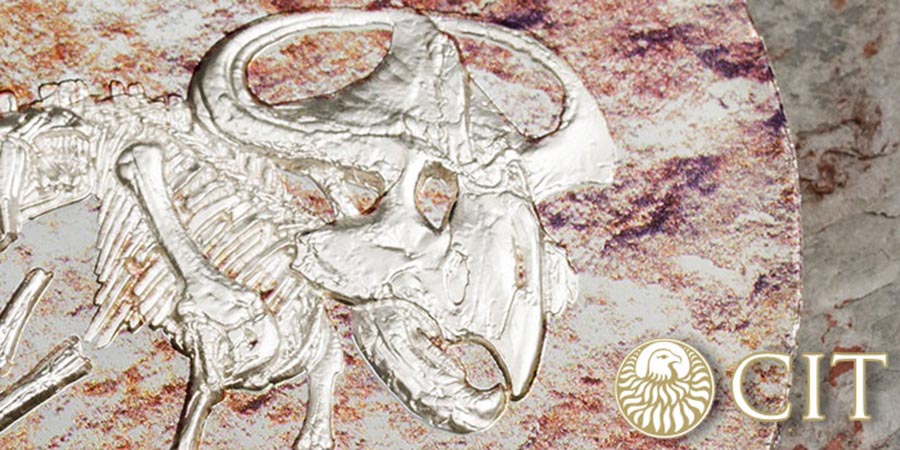
The reverse presents the fossilized skeleton of a Protoceratops; below in italics Protoceratops andrewsi, in print Late Cretaceous, Mongolia.

Story

In 2018, CIT Coin Invest AG initiated the “Prehistoric Beasts” series with a Velociraptor mongoliensis. In 2019, this success story continues with the Protoceratops andrewsi. The two prehistoric species share a close connection.

A fossil was found in the Mongolian Gobi Desert in 1971 that shows a Velociraptor fighting a Protoceratops. This is remarkable because the find was the first evidence of the Velociraptor with its razor-sharp claws really having been the dangerous predator it is presented as in Jurassic Park. For the purpose of boosting the arc of suspense, the dimensions of the turkey-sized Velociraptor were drastically exaggerated, however. The fact that it nevertheless dared to attack the herbivore Protoceratops despite its considerably heavier weight of 400 kilograms, is proven by the fossil known as “Fighting Dinosaurs” amongst paleontologists: while the Velociraptor has rammed its claws into the Protoceratops’ head and attempts to crack open the lower abdomen of its opponent with its beak, the Protoceratops holds his opponent’s arm in his beak respectively. Supposedly, both animals were mortally wounded in this fight. The desert sand then covered them and preserved their remains.

Just like the previous one, the second issue of the “Prehistoric Beasts” series is also struck in the “Red Rock Finish”. A special technique allows for the surface to resemble sandy rocks. Smartminting technology makes the high relief skeleton stand out against its background.

If you want to see a reconstruction of the fight, don’t miss this Chinese YouTube video – it shows the animals in the correct proportions!

Source: https://coinweek.com

Huge Plastic Dinosaur Turns Grandfather's Garden Into Visitor Attraction

Wednesday, March 6, 2019

Jerry Adams, of Cwmbran near Newport, bought the 30ft-long Allosaurus for £1,600 in a charity auction.

Hundreds of people have flocked to a house in Wales after a man installed a 30ft dinosaur in his front garden.

Grandfather of 12 Jerry Adams paid £1,600 to put the Allosaurus in his garden after the National Showcaves Centre for Wales decided to auction the plastic dinosaur to raise money for charity.

Mr Adams, who lives in Cwmbran near Newport, said he bought the beast to entertain three of his grandchildren who have autism.

He said: “I saw it was for sale on the news and I thought that it would be a fantastic garden ornament.

“We just try to make the garden a nice place as we have a lot of passing traffic.”

The dinosaur stands at 20ft high and is between 8ft and 9ft wide.

Mr Adams said he had to adjust the position of the dinosaur, named Alan by his grandchildren, to allow the postman to access their front door.

Asked about the reaction from his neighbours, he said: “They know I’m eccentric, I’ve had a vintage tractor in the garden, but so far no one has complained about it.

“When it arrived, hundreds of cars parked up to come and take a look at it.”

The 58-year-old gardener, who has lived in Cwmbran for 45 years, drove on the M4 for more than an hour with the 30ft-long dinosaur attached to his van, to the “astonishment” of fellow motorists.

The Showcaves Centre attraction, called Dan-yr-Ogof, is a cave system in Wales with 250 dinosaur models on display.

The sale of the reptile, which was at the centre for 20 years, raised money for type 1 diabetes charity JDRF (Juvenile Diabetes Research Foundation).

Dan Owen, a manager at Dan-yr-Ogof, said: “We’ve ordered some new animatronic dinosaurs with sensors that move when someone walks past and we’re running out of room.

“We do a lot with JDRF and thought it would be a good idea to put the dinosaur on eBay.”

The centre chose to donate the money raised from the sale to JDRF, as the son and grandson of chairman Ashford Price both have type 1 diabetes.

Mr Owen said the park had received inquiries from “over a hundred people” asking if they would be putting any more of their dinosaurs up for sale.

Miranda Burdett, regional fundraiser for Wales at JDRF, who previously worked in the dinosaur souvenir shop at the centre, said: “I knew this was going to be a unique fundraiser.

“When I went to see the dinosaur, I realised just how big it is and I just knew it would raise a lot of awareness.

“It’s going to improve lives and it’s a really good fit for us working with the showcaves.”

Source: www.irishnews.com

Teenage T. Rex Was Already Chomping on Prey

Tuesday, March 12, 2019

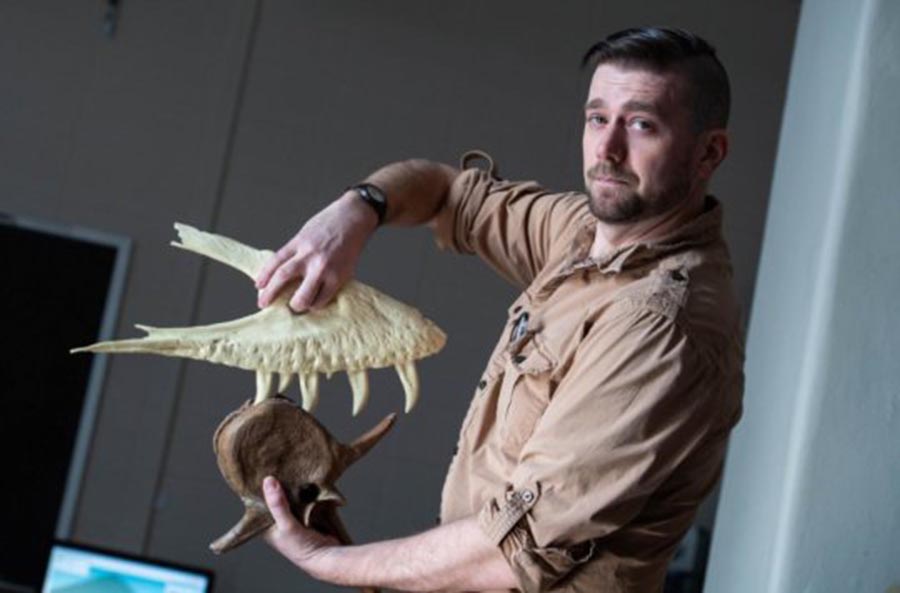
Joseph Peterson, a vertebrate paleontologist at the University of Wisconsin Oshkosh, demonstrates how a T. rex takes a bite. Credit: Patrick Flood, UW Oshkosh

New research from the University of Wisconsin Oshkosh indicates that even as a teenager the Tyrannosaurus rex showed signs that it would grow up to be a ferocious predator.

In a study published last week in the peer-reviewed journal Peerj -- the Journal of Life and Environmental Sciences, UWO scientists reported evidence that a juvenile T. rex fed on a large plant-eating dinosaur, even though it lacked the bone-crushing abilities it would develop as an adult.

While studying fossils from an Edmontosaurus -- a plant-eating Hadrosaurid or duck-billed dinosaur, UWO vertebrate paleontologist Joseph Peterson noticed three large, v-shaped, bite marks on a tail bone and wondered, "Who made these?"

Peterson knew that T. rex -- a member of the meat-eating dinosaur suborder known as Theropoda -- was "a likely culprit."

"We suspected that T. rex was responsible for the bit marks, because in the upper Cretaceous rock formation, where the hadrosaur was discovered, there are only a few carnivorous dinosaurs and other reptiles in the fossil record. Crocodile fossils are found there, but such a crocodile would have left tooth marks that are round rather than the elliptical punctures we found on the vertebra," Peterson explained.

"There also were small Velociraptor-like dinosaurs, but their teeth are too small to have made the marks. Finally, an adult T. rex would have made punctures that would have been too large! That's when we started considering a juvenile tyrannosaur."

To test the hypothesis, Peterson and geology student Karsen Daus, of Suamico, coated the fossil with a silicon rubber to make a silicone peel of the puncture marks.

They found that the dimensions of the "teeth" better matched a late-stage juvenile T. rex (11 to 12 years) than an adult (approximately 30 years).

"Although this T. rex was young, it really packed a punch," Peterson said.

"This is significant to paleontology because it demonstrates how T. rex -- the most popular dinosaur of all time -- may have developed changes in diet and feeding abilities while growing," he said. "This is part of a larger, ongoing research initiative by many paleontologists to better understand how T. rex grew and functioned as a living creature over 65 million years ago."

Most theropod feeding traces and bite marks are attributed to adults; juvenile tooth marks rarely have been reported in the literature, he added.

"We really are in the 'Golden Age' of paleontology," Peterson said. "We are learning more now than we ever thought we would know about dinosaurs. And, we're learn more about how they grew up."


Story Source:

Materials provided by University of Wisconsin OshkoshNote: Content may be edited for style and length.


Journal Reference:

  1. Joseph E. Peterson, Karsen N. Daus. Feeding traces attributable to juvenile Tyrannosaurus rex offer insight into ontogenetic dietary trendsPeerJ, 2019; 7: e6573 DOI: 10.7717/peerj.6573

Source: www.sciencedaily.com

Galleonosaurus dorisae: New Species of Plant-Eating Dinosaur Discovered in Australia

Tuesday, March 12, 2019

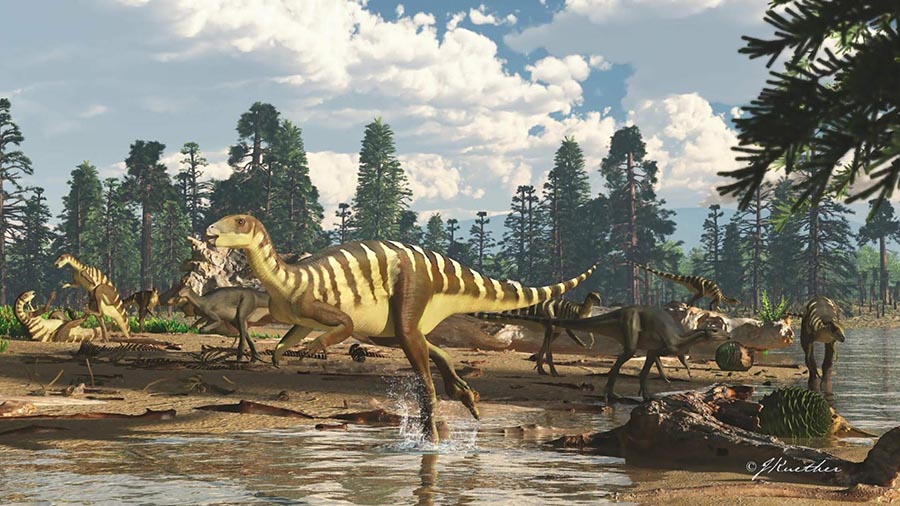
Galleonosaurus dorisae. Image credit: James Kuether.

Paleontologists in Australia have found fossil fragments from a new genus and species of ornithopod dinosaur that walked the Earth during the Early Cretaceous Period.

The new dinosaur belongs to Ornithopoda (ornithopods), a major group of herbivorous bird-hipped dinosaurs.

Dubbed Galleonosaurus dorisae, it inhabited the rift between Australia and Antarctica approximately 125 million years ago (Cretaceous Period).

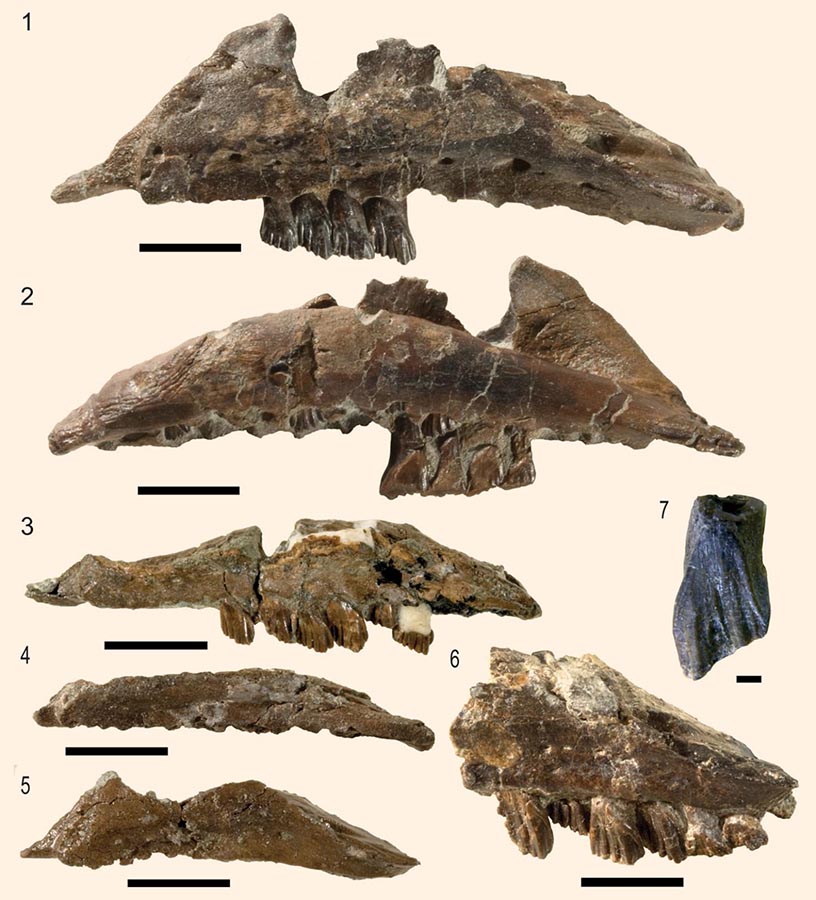
Five fossilized upper jaws of the ancient beast were found at the Flat Rocks locality of the Wonthaggi Formation in a region of Gippsland, Victoria, Australia.

Galleonosaurus is the fifth small ornithopod genus named from Victoria,” said Dr. Matthew Herne, a postdoctoral researcher at the University of New England.

“The discovery confirms that on a global scale, the diversity of these small-bodied dinosaurs had been unusually high in the ancient rift valley that once extended between the spreading continents of Australia and Antarctica.”

“Small ornithopods appear to have thrived on the vast forested floodplain within the ancient rift valley.”

Specimens of Galleonosaurus dorisae from the Flat Rocks Sandstone in the upper Barremian, Wonthaggi Formation, Gippsland Basin, southeastern Australia. Scale bars – 10 mm (1-6); 1 mm (7). Image credit: Herne et al, doi: 10.1017/jpa.2018.95.

Galleonosaurus dorisae is a close relative of Diluvicursor pickeringi, another small ornithopod named by Dr. Herne and co-authors in 2018, from excavations along the Otway coast to the west of the Gippsland region.

“Interestingly, the jaws of the new species and the partial skeleton of Diluvicursor pickeringi were similarly buried in volcanic sediments on the floor of deep powerful rivers,” Dr. Herne said.

“However, Galleonosaurus dorisae is about 12 million years older than Diluvicursor pickeringi, showing that the evolutionary history of dinosaurs in the Australian-Antarctic rift had been lengthy.”

Prior to discovery of Galleonosaurus dorisae, the only other ornithopod known from the Gippsland region was Qantassaurus intrepidus, named in 1999.

“However, Qantassaurus intrepidus had a shorter more robust snout than that of Galleonosaurus dorisae,” Dr. Herne said.

“We consider that these two, similarly-sized dinosaurs fed on different plant types, which would have allowed them to coexist.”

The researchers also found that the ornithopods from Victoria are closely related to those from Patagonia in Argentina.

“We are steadily building a picture of terrestrial dinosaur interchange between the shifting Gondwanan continents of Australia, South America and Antarctica during the Cretaceous period,” Dr. Herne noted.

The study was published in the Journal of Paleontology.

_____

Matthew C. Herne et al. New small-bodied ornithopods (Dinosauria, Neornithischia) from the Early Cretaceous Wonthaggi Formation (Strzelecki Group) of the Australian-Antarctic rift system, with revision of Qantassaurus intrepidus Rich and Vickers-Rich, 1999. Journal of Paleontology, published online March 11, 2019; doi: 10.1017/jpa.2018.95

Source: www.sci-news.com

China Makes Major Progress in Paleontological Research in 2018

Monday, March 11, 2019

Liu Cun Yu, the director of the Beipiao Pterosaur Museum, poses in front of a full-scale model of a Moganopterus zhuiana, a species named after his wife. (Stefen Chow)

The Paleontological Society of China published ten major achievements made in the field in 2018. Here they are:

-- The 1st turtle with a beak from China

A fossilized skeleton of a turtle, dating back about 228 million years to the dawn of the dinosaur era, filled a missing link in turtles' evolutionary history.

Found in the late Triassic deposits in Guanling County in Guizhou Province, the turtle was named Eorhynchochelys sinensis, meaning "the first turtle with a beak from China." The turtle, more than two meters long, had a short trunk and no shell on its back and abdomen.

The turtle is between the evolutionary positions Odontochelys and Pappochelys, which was discovered in Germany, dating back about 240 million years.

-- New mammal ancestor

Scientists from Center for Vertebrate Evolutionary Biology of Yunnan University and Linyi University identified a new mammal ancestor and their research indicates that marsupials may not have originated in Asia.

Well-preserved skeletons of Ambolestes zhoui from 126 million years ago were found in Yixian County in north China's Inner Mongolia Autonomous Region.

Ambolestes zhoui is an early member of the placental lineage. It also carries mixed features both placentals and marsupials, which led researchers to believe that Asia may not be the place of origin for marsupials. The oldest known marsupials are from 110 million years ago from western North America.

-- Qinghai-Tibet Plateau first occupied by humans at least 30,000 years ago

Thousands of stone artifacts recovered from a paleolithic site in southwest China's Tibet Autonomous Region indicate that humans might have conquered one of the highest and most ecologically-challenging places on the globe at least 30,000 years ago.

The Nwya Devu site, located 4,600 meters above sea level in central Tibet, is the earliest archaeological site ever identified on the plateau.

-- Paleobiology Course Book

Evolution of Life and Environment, a book on paleobiology, is a course book for undergraduate and graduate students from all disciplines to grasp the general idea of evolution and environmental change, to consider the Earth as a system and to make contributions to reveal the evolutionary mechanisms of the current global environment and human future.

-- Understanding evolution of modern birds through fossilized tissues

Paleontology has traditionally focused on skeletal remains. Though rarely preserved, soft tissues have the potential to teach us far more about the biology of extinct organisms. Fossils from the Early Cretaceous Jehol Biota are rich with such traces, examples of which were described in the lung tissue and medullary bone of two birds.

The results of both studies indicate that soft tissue specializations evolved before many skeletal changes during the evolution of the highly modified modern bird. This fundamentally changes how paleontologists should interpret skeletal data when trying to reconstruct the biology o extinct animals.

-- Earliest asymmetrical flight feathers in the world

A bird-like dinosaur named Caihong juji from the Jurassic strata about 160 million years ago found in Qinglong of Hebei possesses not only symmetrical flight feathers on its forelimbs but also asymmetrical flight feathers on its tail, representing an important junction point in the evolution of flight feathers from symmetry to asymmetry.

-- Response of marine ecosystems during the end-Permian mass extinction

Professor Song Haijun's team, from China University of Geosciences (Wuhan), published their new findings concerning the evolution of marine ecosystems near the Permian-Triassic mass extinction in Sciences Advances and GSA Bulletin in 2018. Their results show that the end-Permian mass extinction resulted in an abnormal marine ecosystem. Additionally, biodiversity shows a rapid rebound after the mass extinction and reach the pre-extinction level around five million years later. But the recovery of the ecosystem is much more delayed, taking 50 million years, until the end of Triassic.

-- Earliest animal footprints found in China

Researchers from the Nanjing Institute of Geology and Palaeontology under the Chinese Academy of Sciences and Virginia Tech in the United States studied trackways and burrows in the Ediacaran Shibantan Member of the Dengying Formation (551 to 541 million years ago) in the Yangtze Gorges area of southern China.

They found trace fossils that represent some of the earliest known evidence for animal appendages, or legs.

-- The Snowball Earth triggered animal evolution

Professor Shen Bing from Peking University and his colleagues published research in Nature Communications on August 1, 2018, reporting the widespread pyrite concretions near the top of Nantuo Formation in South China. This study indicates that the termination of Marinoan global glaciation might have triggered the Ediacaran diversification of eukaryotes and the subsequent evolution of animals.

-- One more golden spike in China

A proposal that the Cambrian third series - 'Miaolingian series' and the fifth stage - 'Wuliuan stage' in Guizhou of China was passed by the International Union of Geological Sciences in 2018. Therefore, this is the 11th golden spike, or Global Standard Stratotype-Section and Point in China (GSSP).

Source: www.xinhuanet.com

27,000-Year-Old Tooth of Giant Ground Sloth Sheds Light on Animal’s Diet and Climatic Exposure

Saturday, March 9, 2019

The Pan-American sloth (Eremotherium laurillardi). Image credit: Sergio de la Rosa / CONABIO / CC BY-SA 4.0.

By analyzing a tooth from the first fossil remains of the extinct Pan-American sloth (Eremotherium laurillardi) found in Belize, a team of paleontologists has uncovered insights into the creature’s dietary adaptations, as informed by local climate.

The Pan-American sloth had a distribution from southern Brazil to the Gulf and Atlantic coast regions of North America.

This animal could reach a length of 20 feet (6 m), which, in an upright position, would have permitted it to feed at higher levels in trees.

In 2014, divers found the fossil remains of a 27,000-year-old Pan-American sloth — parts of a tooth, humerus and femur — while searching for ancient Maya artifacts in a water-filled sinkhole in Cara Blanca, Belize.

Though partially fossilized, the tooth still held enough unaltered tissue for stable carbon and oxygen isotope analysis, which provided clues to what the sloth ate in the last year of its life. This, in turn, revealed much about the local climate and environment of the region at the time.

“Our findings add to the evidence that many factors, in addition to a changing climate, contributed to the extinction of megafauna in the Americas,” said co-lead author Professor Lisa Lucero, from the Department of Anthropology at the University of Illinois at Urbana-Champaign.

“One of those potential factors is the arrival of humans on the scene 12,000 to 13,000 years ago.”

“The teeth of giant sloths like the one found in Belize, Eremotherium laurillardi, differ from those of other large mammals, like mammoths, that went extinct between 14,000 and 10,000 years ago,” said first author Jean Larmon, a graduate student at the University of Illinois at Urbana-Champaign.

“Giant sloth teeth have no enamel, the hard, outer layer of human and some animal teeth that can be analyzed to learn about their diet.”

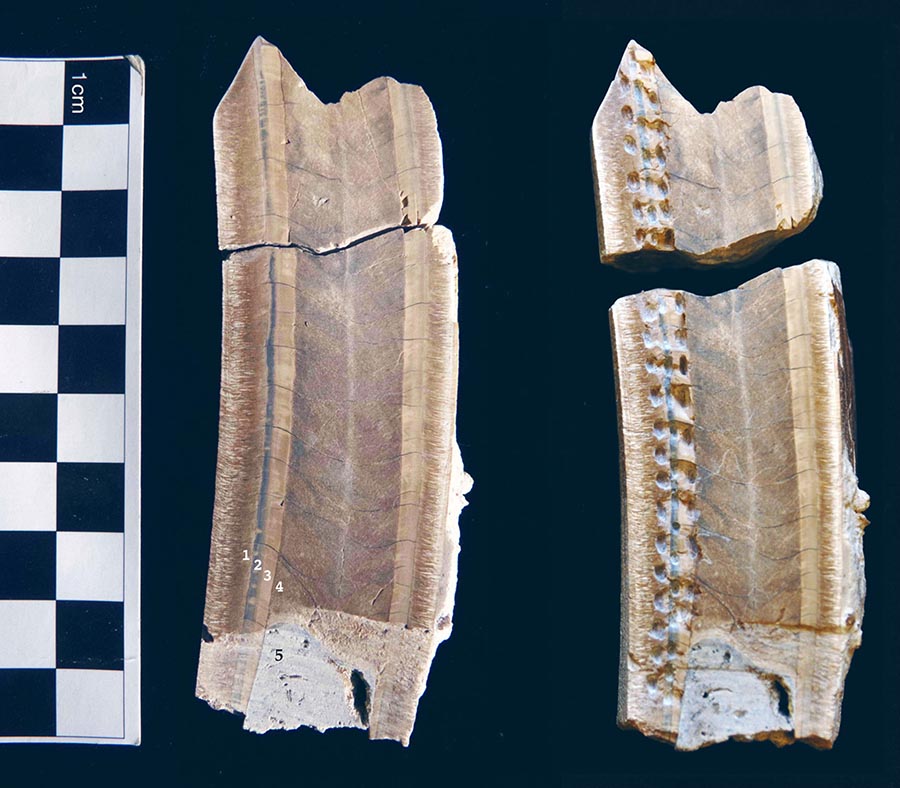
Left: teeth of the Pan-American sloth (Eremotherium laurillardi) are composed of two cusps (i.e., bilophodont), are ever-growing (i.e., hypselodont) and self-sharpening, and are made of mineralized dental tissue types that are softer than enamel; numbers indicate the cementum (1), outer orthodentin (2), inner orthodentin (3), vasodentin (4), and carbonate concretion (5). Right: the location of isotope samples along the growth access of the tooth. Image credit: Jean T. Larmon & Stanley Ambrose, University of Illinois at Urbana-Champaign.

By using cathodoluminescence microscopy, a technique that causes minerals to glow and can detect the extent of mineralization in fossils, the researchers discovered that one type of tooth tissue, the dense orthodentin, was largely intact.

They drilled 20 samples of orthodentin for isotopic analysis along the 3.9-inch (10 cm) long tooth fragment, spanning more than a year of tooth growth.

“This allowed us to trace monthly and seasonal changes in the sloth’s diet and climate for the first time, and also to select the best part of the tooth for reliable radiocarbon dating,” said Professor Stanley Ambrose, also from the Department of Anthropology at the University of Illinois at Urbana-Champaign.

The isotopic analysis revealed that the giant sloth lived through a long dry season, which lasted about seven months, sandwiched between two short rainy seasons.

It also revealed that the creature lived in a savanna, rather than a forest, and consumed a variety of plants that differed between wet and dry seasons.

“We were able to see that this huge, social creature was able to adapt rather readily to the dry climate, shifting its subsistence to relying upon what was more available or palatable,” Larmon said.

“This supports the idea that the sloths had a diverse diet. That helps explain why they were so widespread and why they lasted so long. It’s likely because they were highly adaptable,” Professor Lucero said.

The findings were published in the journal Science Advances.

_____

Jean T. Larmon et al. 2019. A year in the life of a giant ground sloth during the Last Glacial Maximum in Belize. Science Advances 5 (2); doi: 10.1126/sciadv.aau1200

Source: www.sci-news.com

Reverse-Engineering Conservation: Revealing the Secrets of the First Scientifically Described Dinosaur

Saturday, March 9, 2019

Megalosaurus by Raul Martin

The right dentary of Megalosaurus bucklandii – the first scientifically described dinosaur – has been part of the collection of the Oxford University Museum of Natural History since 1797. Yet surprisingly little is known about the specimen’s history after it was acquired by the museum. A new analysis published in Heritage Science tried to reverse engineer that conservation history and in doing so discovered new findings.

The lectotype dentary of Megalosaurus bucklandii. Image copywright Oxford University Museum of Natural History (OUMNH).

Today’s museums are home to an overwhelming number of objects from the depths of history, ranging from relics of cultures and societies long past to the remains of ancient leviathans that defy modern understanding. Among these myriad objects are a smaller proportion with great cultural or scientific significance. Their importance to human understanding of the past means they remain sequestered away in museum collections, safely kept in the knowledge that their significance is fully understood.

The right dentary of Megalosaurus bucklandii, part of the lectotype of the specimen (one part of a collection of specimens that is the quintessential example of a species), is one such artefact at the Oxford University Museum of Natural History (OUMNH). This jawbone represents the first scientifically described dinosaur, the first fossil specimen to be recognized as belonging to a then as-yet unknown group of animals. Described by the Reverend Williams Buckland in 1824 and then included among the first description of the ‘Dinosauria’ by Richard Owen in 1842, Megalosaurus and its cousins went on to kickstart the first dinosaur craze in Victorian England. This legacy arguably persists to this day.

Reverse-engineering a conservation history

CT Scan Data of the dentary of Megalosaurus bucklandii. Red is P1 and Green is P2. Wilson et al. 2018. A) Medial; B) Lateral.

In spite of this, surprisingly little is known about the specimen itself. Museum records for the specimen are scant. It is known that it was purchased in 1797 but little information appears to have been recorded on what actually happened in the interim between then, its description and today. This is especially concerning as the specimen shows considerable evidence of restoration in plaster, as noted by Benson et al. (2008). The process of conservation, the treatment and stabilization of damage and degradation to museum objects mandates knowledge of what has previously been done to an object. An absence of this information makes future conservation efforts challenging and risky.

In order to overcome this conservational concern, we attempted to reverse engineer the conservational history of the specimen, utilizing cutting-edge imaging techniques. Previous research (Wilson et al. 2017) exploring the specimen using X-Ray Computed Tomography (XCT) – the use of X-rays to reconstruct the internal and external structure of an object based on its relative density – revealed the presence of two separate plasters used to repair the specimen. However, this was insufficient to properly determine the nature of the plasters.

To better characterise these plasters, two elemental mapping methods were used: Energy-Dispersive X-ray Spectroscopy (EDS) and X-Ray Fluorescence (XRF). Both of these methods rely on the principle of bombarding a material with high-energy x-rays and detecting the emission of characteristic secondary x-rays, which determine what elements are present in the sample.

A conservative conservation approach

Map of Elemental Composition of P1 in the dentary of Megalosaurus bucklandii. Wilson et al. 2018.

Analysis of the two plasters revealed that the more common plaster, P1, was composed of impure gypsum plaster (Plaster of Paris), filled with sand grains, grains of the original specimen, and small particles of the mineral Minium, a reddish lead oxide. The plaster was also coated in shellac. The second plaster, P2, was also a gypsum plaster, lacking these Minium and sand grains but being coated in barium hydroxide instead of shellac, a moisture sealant. The identification of these plasters has helped to better elucidate previous conservational efforts and how to treat the specimen in the future.

This overall represents an extremely conservative approach to conservation by the conservator. The integration of reddish Minium particles represents a conscious effort to colour the plaster to better match the weight and colour of the original specimen and to prioritise verisimilitude of the plaster restoration. The plaster restoration was also extremely conservative of the geometry of the specimen, with small fragments of the original damaged specimen being suspended in plaster.

Dinosaur teeth and evolutionary significant dentary canals

New Structures in the dentary of Megalosaurus bucklandii. A) Medial; B) Lateral.

Also revealed from the analysis are a number of new findings. Hidden teeth, in the process of growing and being replaced were elucidated by the XCT analysis, shedding some insight on the tooth replacement of Megalosaurus. Additionally, a complex series of dentary canals within the jawbone were revealed. These structures are poorly explored but recent research has begun to show that they could be of evolutionary significance. Thus, even an old specimen has some new tricks to show.

Overall, Megalosaurus presents a powerful case study for conservation professionals and shows how cutting edge technologies can reverse-engineer the chequered history of objects that are poorly understood. It showcases new opportunities to get new life out of old objects, and demonstrates that even objects that are thought to be understood can still surprise.

Source: http://blogs.springeropen.com

Pages