nandi's blog

New Digable Dinosaur Egg Toys Are Perfect For Your Little Paleontologist

Sunday, April 7, 2019

New Digable Dinosaur Egg Toys Are Perfect For Your Little Paleontologist

With so many dino toys on the market today, from inflatable T-Rexes to wing-flapping pterodactyls, I thought I'd seen it all. But the new digable dinosauar egg toys, from educational toymaker Lakeshore, really do break through the clutter (pun intended!). In order to play with the extinct creatures, you first have to excavate them from their clay eggs using some authentic-looking tools. I'm pretty sure that kids and adults alike will totally dig being a "paleontologist" (pun intended again!).

Designed for ages 4 through 11, the Dig & Discover Dinosaur Eggs set includes 12 dino eggs, 12 wooden chisels, and 12 brushes. Here's how it all works: Using a chisel, you break open the textured brown eggs, and then you brush away the debris to reveal a unique dinosaur inside each one, ranging from the spiky stegosaurus to the long-necked plesiosaur. The dinosaurs are plastic and neon-colored, so they seem a little less authentic than the excavation process itself, but the kit does come with an educational Excavation Guide, which features some cool facts about each dino. The dino egg kits are available on Amazon for $23.

Unlike real dinosaur eggs, the ones included in this kit are pretty small, measuring in at just under three inches. But, while the dozen eggs thankfully don't take up much space, they do make a bit of a mess (although a little dust can be expected at any good archaeological site, right?). The chiseling leaves some debris behind, so it's advisable to do this activity either outside, or over a baking sheet or disposable tablecloth. Having said that, these eggs are an awesome hands-on activity for children, and one that feels educational and engaging at the same time.

Click the picture.

However, if you think the excavating will be easy, think again. Many of the reviews online emphasize the real effort involved. "My 5-year-old grandson loved the activity. Quite a challenge to break open the egg! The excitement once opened was contagious." wrote "Kary" on the Lakeshore website.

Another reviewer on the Lakeshore site had this to say: "Four and six- year-old girls had a great time chiseling the dinosaurs. Eggs are quite hard so the four-year-old needed some help getting started. Six year old did fine by herself... Took around 15 - 30 minutes per egg depending on the age patience of the child."

I have to say, I'm impressed that kids really have to work to get to the toy inside. It seems like a great activity not only for fine-motor skills, but also for teaching perseverance and patience. It demonstrates that in the real world, excavating fossils requires a lot of hard work and skill.

I also love that the Dig & Discover Dinosaur Eggs provide a fun, interactive science lesson. Who knows what interests and curiosities a STEM-focused activity like this could spark? Maybe it's creating the next generation of paleontologists that will go on to make the next great prehistoric discoveries. At the very least, your kid will have fun getting his or her hands dirty!

Source: www.romper.com

Dinosaur Skin Impression Goes on Show at Tring Museum

Monday, April 8, 2019

Evidence such as skin imprints are important because they give "better, more precise ideas about the actual biology" of the animals, the museum said

A dinosaur skin impression found 150 years ago has gone on display for what is believed to be the first time.

The fossilised haestasaurus imprint is among 15 dinosaur specimens at the Natural History Museum in Tring, Hertfordshire.

Many of them are being seen by the public for the first time since being unearthed in the mid-19th Century.

The museum said the skin impression had given people an idea what dinosaurs looked like on the outside.

Other items on display include an iguanodon leg and pantydraco bones.

Prof Paul Barrett, the museum's dinosaur researcher, said: "These finds would have been greeted with a huge amount of public excitement.

"The skin find only came about 20 to 25 years after it was decided that dinosaurs were these big extinct reptiles so [the finds] just fed the fervour about these huge animals, what they were and gave a real impression of what they would have been like.

A hip bone from a megalosaurus was worked on by the museum's founder Sir Richard Owen

"We think it's probably the first time they've been on display... we have to say probably as they may have been on display in the Victorian era, but we're fairly sure that most of these haven't - not within living memory anyway."

The museum said the skin impression was one of only three pieces of the haestasaurus ever found.

They were discovered in 1852 by Gideon Mantell, whose collection came to the museum when he died.

"It's an impression of the skin made in the rock that was surrounding the animal as it died," Prof Barrett said.

"It would have been the first time we really got any idea of what the outsides of these animals looked like rather than just having their bones."

Presentational grey line

Dinosaurs

  • Dinosaurs lived on Earth for about 245 million years
  • All non-avian dinosaurs went extinct about 66 million years ago
  • There are roughly 700 known species of extinct dinosaurs

Source: American Museum of Natural History / www.bbc.com

Peregocetus pacificus: Four-Legged ‘Whale’ Lived in Peru 43 Million Years Ago

Saturday, April 6, 2019

This illustration shows an artistic reconstruction of two individuals of Peregocetus pacificus, one standing along the rocky shore of nowadays Peru and the other preying upon sparid fish. Image credit: A. Gennari.

A new species of ancient whale ancestor has been identified from a fossilized skeleton found in Peru.

Named Peregocetus pacificus, the four-legged whale lived approximately 43 million years ago (middle Eocene Epoch).

Its skeleton was discovered in marine sediments at Playa Media Luna on the southern coast of Peru.

It was analyzed by Dr. Olivier Lambert of the Royal Belgian Institute of Natural Sciences and his colleagues from Italy, France and Peru.

“This is the first indisputable record of a quadrupedal whale skeleton for the whole Pacific Ocean, probably the oldest for the Americas, and the most complete outside India and Pakistan,” Dr. Lambert said.

Anatomical details of the skeleton allowed the paleontologists to infer that the animal was capable of maneuvering its large body (up to 4 m, or 13 feet, long, tail included), both on land and in the water.

For instance, features of the caudal vertebrae (in the tail) are reminiscent of those of beavers and otters, suggesting a significant contribution of the tail during swimming.

“The presence of small hooves at the tip of the whale’s fingers and toes and its hip and limbs morphology all suggest that this whale could walk on land,” Dr. Lambert and co-authors explained.

“On the other hand, anatomical features of the tail and feet, including long, likely webbed appendages, similar to an otter, indicate that it was a good swimmer too.”

The geological age of Peregocetus pacificus and its presence along the western coast of South America strongly support the hypothesis that early cetaceans reached the New World across the South Atlantic, from the western coast of Africa to South America.

“The whales would have been assisted in their travel by westward surface currents and by the fact that, at the time, the distance between the two continents was half what it is today,” the researchers said.

“Only after having reached South America, the amphibious whales migrated northward, finally reaching North America.”

The research was published online in the journal Current Biology.

_____

Olivier Lambert et al. An Amphibious Whale from the Middle Eocene of Peru Reveals Early South Pacific Dispersal of Quadrupedal Cetaceans. Current Biology, published online April 4, 2019; doi: 10.1016/j.cub.2019.02.050

Source: www.sci-news.com

5 Things You Didn't Know About Paleoart

Wednesday, April 3, 2019

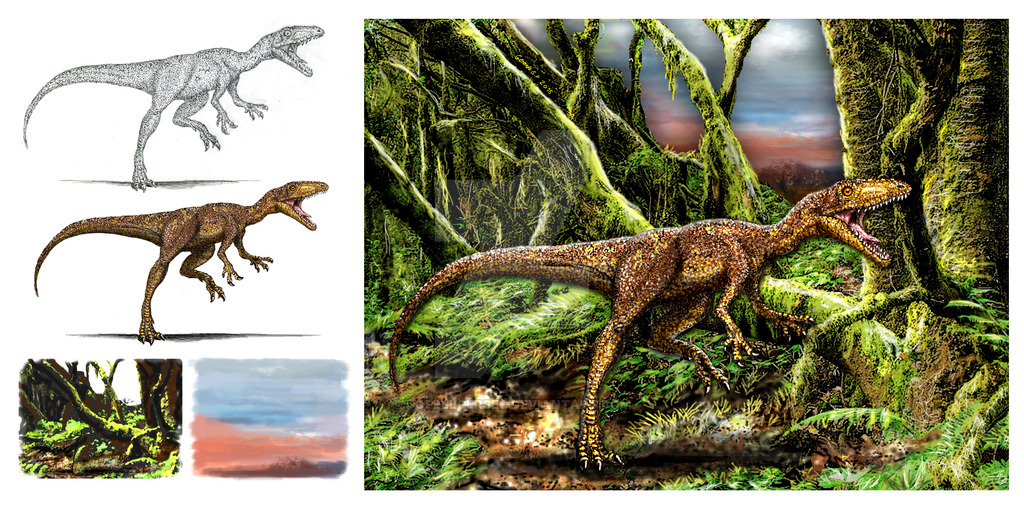
Tachiraptor admirabilis step by step by dopellgersec

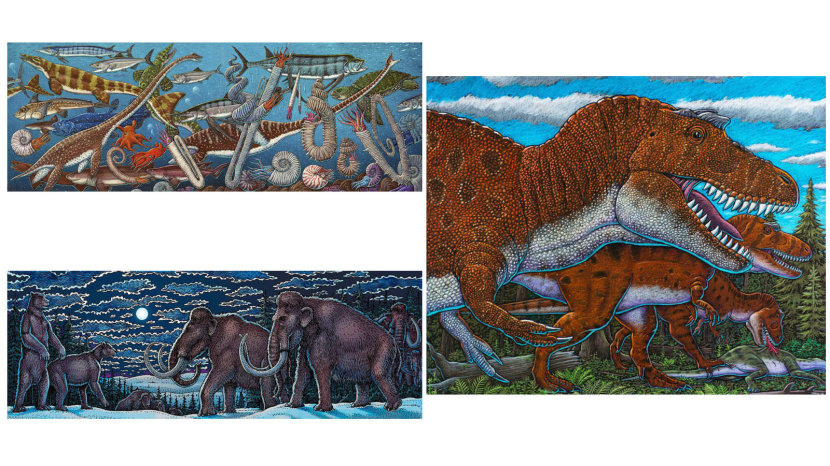
"Shared passion for an obscure topic is what binds scientists and artists," celebrated paleoartist Ray Troll tells us in an email. "They're both curiosity-driven." He would know. Based in Alaska, Troll builds on scientific findings to create art that depicts prehistoric life.

Through paleoart, fossils are revived. A single drawing or sculpture can define how the public will visualize an extinct species. So paleoartists strive to keep their work as accurate as possible — a task that gets harder when the experts disagree. It's a tough job, to be sure, but it's also a dream job for loads of fossil fans and dinosaur enthusiasts. Here are five facts about paleoart and the artists who create it.

1. A "Dinosaur Renaissance" Changed the Game

Paleoart needn't always feature dinosaurs. All prehistoric organisms, from early palm trees to woolly mammoths, make worthy subjects. Nevertheless, the charismatic reptiles were at the center of a significant period in the history of this art form, the "dinosaur renaissance."

Prior to the 1960s, dinosaurs were largely written off as dimwitted, tail-dragging hulks. Most paleoart from the early 20th century reflects that view.

But in 1969, Yale paleontologist John Ostrom published a new paper on Deinonychus, an 11-foot (3.3-meter) predator akin to Velociraptor. Noting its long legs and sickle-shaped claws, Ostrom claimed Deinonychus was an athletic beast who ran down its prey and might've even hunted in packs. The scientist went on to popularize the now widely accepted idea that today's birds are descended from Mesozoic dinos.

Exciting hypotheses like these changed the discourse about how dinosaurs looked and behaved. In the 1970s and 1980s, a growing number of artists responded by illustrating the creatures in active, dynamic poses. What followed was a renewed public interest in both the study of dinosaurs and in paleoart itself.

2. A Technique Called "Shrink Wrapping" Has Met Some Pushback

Bare bones and skeletons may not tell you a whole lot about the overlying soft tissue. Hence, some paleoartists choose to reconstruct animals (reptiles in particular) as lanky beasts with ultra-low body fat, skinny tails, and heads that are largely devoid of cartilage or loose skin. The practice has been called "shrink wrapping."

"I think there are some really valid points to be made about 'shrink wrapping,'" Troll says. "Many paleoartists are reluctant to jump into more speculative reconstructions, preferring to play it safer." By keeping their animals lean and mean, paleoartists can highlight known skeletal anatomy without making conjectural guesses about an animal's soft tissues that might not have been preserved.

Back in the dinosaur renaissance, shrink wrapping was in fashion. That's no longer the case. Modern critics point out that living animals tend to look a lot different than you might expect if you had nothing to go on but their naked skeletons. "Things like trunks, ears and blubber don't usually fossilize," Troll says.

Matt Celeskey, a paleoartist and museum exhibit designer, recently offered us his thoughts on the issue. "Today's paleoartists are looking more closely at the extent of soft tissue in living animals," he says via email. Chunky limbs and necks (not to mention poofy dino feathers) have gone mainstream. "I think this 'fleshing out' of paleoart makes for heightened levels of believability in the reconstructions, and greater diversity in the way artists approach their subjects," Celeskey says.

(Clockwise from top left) "North Pacific Cretaceous Marine Life," "Nanuqsaurus (the 'Polar Bear Lizard)" and "Mega Bears and Mighty Mammoths" are all examples of paleoart illustrated by paleoartist Ray Troll. PHOTOS COURTESY RAY TROLL

3. Scientists and Paleoartists Work Hand-in-Hand to Present New Findings

Original illustrations are a staple of paleo-themed press releases. Bone or skeletal drawings may also adorn technical papers. To get these pieces made, artists must be recruited.

"As a general rule, scientists are responsible for pulling together the artwork used to illustrate or promote their research," Celeskey says. "So the best way to get these jobs is to make sure paleontologists know your work and know that you take [it] seriously."

"I've done a few 'life reconstructions' for scientific papers about newly discovered creatures/fossils," Troll says. "I landed the 'gigs' via friendships and personal relationships, getting to know scientists either through meeting them at a conference, visiting a museum or via my own curiosity."

Once the parties reach an agreement, relevant info will be shown to the artist. Looking at fossils with one's own eyes is helpful here, but sometimes paleo illustrators have to make do with photographs.

At all rates, when you're part of an effort like this, Celeskey says "it is generally understood that no one will go public before the official research is released."

4. Skeletal Drawings Demand Tons of Research

To scientists, the skeletal drawing is one of the most useful forms of paleoart. An animal's skeleton is usually depicted in an upright (i.e.: standing or running) position and juxtaposed against a black silhouette that represents the creature's body profile. Unfortunately, in the fossil record, complete skeletons tend to be rare. When parts are missing or broken, scientists — and artists — can only speculate about what those elements looked like in life.

"Every skeleton presents unique challenges," Celeskey says, "but I find the most difficult thing is filling in the parts you don't know — extrapolating the shapes of missing bones or correcting the shapes of bones that have been damaged or distorted [by time]. Filling in each missing piece involves a complex mix of research, inference, and educated guesses, and I always wonder if there are better choices than the ones I end up making."

5. London Is Home to a Fascinating Example of Victorian Paleoart

In 1853, sculptor Benjamin Waterhouse Hawkins was hired to build more than 30 full-sized concrete models of prehistoric animals for London's Crystal Palace Park. The man really did his homework, consulting experts, scrutinizing fossils and reviewing the scientific literature. In short, he was a dedicated paleoartist.

Restoration projects have helped these masterworks survive to the present day. The beasts attract thousands of visitors every year — even though they're no longer deemed "accurate." Hawkins' Megalosaurus, for example, stands menacingly on all fours, but scientists now think the meat-eating dinosaur was bipedal. Nevertheless, the Victorian-era giants capture the prevailing wisdom of their time, giving them immense cultural value. Prehistory matters, but so does our history.


Source: https://science.howstuffworks.com

Would Bringing Back Extinct Animals Turn Out as Badly as it Did in 'Jurassic Park'?

Tuesday, April 2, 2019

The Indominus rex readies her attack in Jurassic World. - Universal Pictures

On a frigid January night, a Harvard genetics professor with a billowing white beard stood stage left in a theatre on Manhattan's Upper East Side, an icon of the environmentalist movement in a fleece vest beside him. Both men were staring down a toothy problem: How could they convince their counterparts on the stage, along with the 300 people who'd filed into Hunter College's Kaye Playhouse for a debate, that the world should bring back velociraptors or, at the very least, an extinct pigeon?

The theme from the 1993 blockbuster "Jurassic Park" was playing in the background, chiseling away at their argument before the debate even began. In the film, based on the 1990 Michael Crichton bestseller, dinosaurs are brought back from extinction to fill a theme park. "That film took sides. The experiment blows up. People get hurt," moderator John Donvan told the crowd during introductions. "But not before actor Jeff Goldblum declares, 'Scientists were so preoccupied with whether or not they could that they didn't stop to think if they should.' And then, a dinosaur eats Jeff Goldblum."

Actually, a dinosaur does not eat Goldblum's brainy and brawny mathematician character, but chaos certainly reigns in the movie and its myriad sequels because of de-extinction. Those images are what George Church, 64, of the billowing white beard, who helped launch the Human Genome Project, and Stewart Brand, 80, of the fleece vest, who is a founder and editor of the Whole Earth Catalogue, would need to overcome to win this evening's debate.

The official motion for the night, "Don't Bring Extinct Creatures Back to Life," was chosen by Intelligence Squared, a nonprofit that turns academic-level debates into popular live events and podcasts. The Jeff Goldblums of the evening, arguing for the motion — and against Church and Brand — were Lynn Rothschild, 61, an evolutionary biologist and astrobiologist with NASA, and Ross MacPhee, 70, a curator at the American Museum of Natural History across Central Park.

Brand started on the offensive. Controversy around de-extinction, he said, is "made up." He wasn't arguing they should resurrect carnivorous dinosaurs. Instead, he said, de-extinction could be achieved through hybrids, animals created from both living, endangered species and extinct ones, using CRISPR — an acronym for a relatively new tool that has been likened to "playing god" because it allows scientists to remove and replace genes. Eventually, CRISPR could be used to bolster agricultural production or to replenish wildlife that's slowly disappearing.

That is the goal of the Revive & Restore project, a California nonprofit co-founded by Brand that seeks to "enhance biodiversity through new techniques of genetic rescue for endangered and extinct species." The group is working to reintroduce the extinct passenger pigeon back into the wild by removing genes from modern band-tailed pigeons and replacing them with passenger-pigeon genes.

Restore & Revive would like to do something similar with woolly mammoths, editing the extinct creature's genes into those of modern Asian elephants. In that case, though, the goal is to help increase the population of endangered Asian elephants, which has been decimated by a herpes virus. "We're not just curing extinction," Brand told the audience. "The technology that de-extinction is leading the way in is now being used by us and by others to prevent extinction."

In 2018, Brand and Church travelled to northeast Siberia, where Russian scientists are attempting to re-create a grassland ecosystem known as the mammoth steppe, named after its predominant and extinct herbivore, the woolly mammoth. As the number of mammoths dwindled, dense foliage took root and erased grassland. To restore it, scientists have used bulldozers to knock down trees and shrubs, and brought in herbivores, including elk and moose, to graze and to keep the foliage at bay. Church said mammoth-and-Asian-elephant hybrids could once again inhabit Siberia. He also urged everyone to "loosen up" about the prospect of hybrids. "There's a lot of hybridization that occurs in mammals. ... I am partially Neanderthal," he said, referring to estimates by scientists that about 20 per cent of Neanderthal genes can be found in modern humans.

(Oddly enough, no one mentioned during the debate that Jack Horner, a Montana State University paleontologist and science adviser on the first "Jurassic Park" film, is also working on a hybrid called "chickenosaurus." "As far as I'm concerned, we should discover everything. There shouldn't be any limits on it," he told NBC News in 2018. "After we discover something, then you can put some limits on it.")

But a hybrid mammoth, roaming Russia once again, raises all sorts of questions, Rothschild and MacPhee said: Could a breeding population ever be established? Would this hybrid be released into a world with no natural predators? How would a mammoth know how to be a mammoth without other mammoths around? "You've got all the problems of not having a mom, and not having people — other organisms to learn from, and not having the right microbiome and so on," Rothschild said. "And so, each of these individuals, I believe, will be suffering for something that we could be solving a different way."

During a Q&A, an audience member asked the four onstage if someone with great wealth could be moving forward with the technology, possibly for commercial purposes, while scientists were still debating whether they should. Brand said there was "exactly nothing" happening in the de-extinction world that had commercial purposes. MacPhee, in response, said he was pleased he wasn't "the most naive person on the panel tonight." He asked: "You don't think there's a future in having saber-toothed tigers that you can use for hunting purposes?"

Rothschild took the argument even further, wondering whether someone could attempt to de-extinct a Neanderthal for commerce or simply in the name of science. The idea, Rothschild said, was "morally repugnant." "We have enough trouble with humanity recognizing that we have roughly equal intellects across the races. And to purposefully re-create a species that we know is going to be inferior in some way is just asking for enormous trouble," she said in her closing argument.

"So back in the day when the Homo sapiens was interbreeding with Neanderthals, you would have discouraged that?" Brand joked. The audience laughed. But in the end, based on the votes tallied before and after the debate, more people came around to MacPhee and Rothschild's side than Church and Brand's. For once, the Jeff Goldblums won.

I circled back to Brand a month later in search of a serious answer to Rothschild's ethical concerns about bringing back Neanderthals. "I'd guess that Neanderthals would be accepted as humans today (at least in our open-minded and nurturing communities)," he replied in an email. But he was skeptical anyone would want to revive them because it would be a step back instead of forward for humanity.

I asked if he planned on seeing the next "Jurassic Park" film, which is due out in 2021. He was a maybe. He said he prefers science films that are less "dystopic," but added: "Engaging the public with any scientific details is good."

Source: www.thespec.com

Dinosaur Fossils Kept Secret for Years Show the Day of Killer Asteroid

Tuesday, April 2, 2019

This handout photo obtained March 30, 2019 courtesy by the University of Kansas shows Robert DePalma(L)and field assistant Kylie Ruble(R) excavate fossil carcasses from the Tanis deposit (Credit: ROBERT DEPALMA/AFP/Getty Images)

Research that had been kept secret for years that captured a fossilized snapshot of the day nearly 66 million years ago when an asteroid hit Earth, wiping out nearly all life on the planet, including the dinosaurs, has finally been released, shocking the scientific community.

The researchers say they found evidence in North Dakota of the asteroid hit in Mexico, including fish with hot glass in their gills from flaming debris that showered back down on Earth. They also reported the discovery of charred trees, evidence of an inland tsunami and melted amber.

Additionally, University of Amsterdam professor Jan Smit said he and his colleagues found footsteps from dinosaurs moments before they met their untimely death.

Smit said the footprints — one from a plant-eating hadrosaur and the other of a meat eater, maybe a small Tyrannosaurus Rex — is "definite proof that the dinosaurs were alive and kicking at the time of impact ... They were running around, chasing each other" when they were swamped.

"This is the death blow preserved at one particular site. This is just spectacular," said Purdue University geophysicist and impact expert Jay Melosh, who wasn't part of the research but edited the paper released Friday by the journal Proceedings of the National Academy of Sciences.

Melosh called it the field's "discovery of the century." Despite the incredible finds, other experts in the field have concerns about the work, including the lack of access to this specific Hell Creek Formation fossil site for outside scientists. Hell Creek — which spans Montana, both Dakotas and Wyoming — is a fossil treasure trove that includes numerous types of dinosaurs, mammals, reptiles and fish trapped in clay and stone from 65 to 70 million years ago.

Kirk Johnson, director of the Smithsonian National Museum of Natural History who also has studied the Hell Creek area for 38 years, said that the work on the fish, the glass and trees "demonstrates some of the details of what happened on THE DAY. That's all quite interesting and very valid stuff." Johnson said the restrictions are preventing confirmation by other researchers, while Smit says it due to protecting the site from poachers.

Johnson also raised concerns about claims made by the main author, Robert DePalma, a University of Kansas doctoral student, that appeared in a New Yorker magazine article published last week but not in the scientific paper.

“A tangled mass of freshwater fish, terrestrial vertebrates, trees, branches, logs, marine ammonites and other marine creatures was all packed into this layer by the inland-directed surge,” Robert DePalma said in a statement. “Timing of the incoming ejecta spherules matched the calculated arrival times of seismic waves from the impact, suggesting that the impact could very well have triggered the surge.”

The University of Kansas has not yet responded to a request for comment from Fox News.

For decades, the massive asteroid crash that caused the Chicxulub crater in Mexico's Yucatan Peninsula has been considered the likely cause of the mass extinction often called the "KT boundary" for the division between two geologic time periods. A study suggests that the asteroid also caused a worldwide tsunami that reached more than 5,000 feet in the air.

Other researchers believe that volcanic activity played a role in the demise of the dinosaurs.

Johnson and Melosh said this helps prove the asteroid crash case. There were only a few dinosaur fossils from that time, but the footsteps are most convincing, Smit said.

There was more than dinosaurs, he said. The site includes ant nests, wasp nests, fragile preserved leaves and fish that were caught in the act of dying. He said that soon after fish die they get swollen bellies and these fossils didn't show swelling.

The researchers said the inland tsunami points to a massive earthquake generated by the asteroid crash, somewhere between a magnitude 10 and 11. That's more than 350 times stronger than the 1906 San Francisco earthquake.

Purdue's Melosh said as he read the study, he kept saying "wow, wow, what a discovery."

The details coming out of this are "mind-blowing," he said.

The North Dakota fossils are the latest in a series of fascinating dinosaur discoveries. Paleontologists recently confirmed that the world's largest T. rex has been discovered in Canada. In China, an incredible 110-million-year-old bird fossil was found with an egg inside.

Separately, duck-billed dinosaurs were recently discovered in the Arctic, a find that raises new questions about biodiversity among dinosaurs during the late Cretaceous period.

Source: www.foxnews.com

Pacific Mastodon: New Species of Ancient Elephant Relative Identified

Tuesday, April 2, 2019

The Pacific mastodon (Mammut pacificus), holotype skull and tusks; a skull in: (A) dorsal, (B) ventral, (C) left lateral, (D) right lateral, (E) posterior, (F) distal end of left tusk (I1), lateral, and (G) right tusk (I1), lateral view; (A-E) images of a resin cast of the holotype skull on exhibit at the Western Science Center. Scale bar – 10 cm. Image credit: A.C. Dooley Jr et al, doi: 10.7717/peerj.6614.

A new species of mastodon that lived during the Pleistocene Epoch has been identified from fossil found in California and Idaho.

Mastodons are any species of extinct proboscideans in the genus Mammut. Often confused with mammoths, they are another, more distant, relative of living elephants.

These animals were widespread across North America and Central America during the Pliocene Epoch up to their extinction at the end of the Pleistocene Epoch around 11,000 years ago.

Over five species are currently recognized, including the well-known American mastodon (Mammut americanum) that had a widespread distribution across nearly every U.S. state, Canada, and Mexico.

The newly-identified species, named the Pacific mastodon (Mammut pacificus), was widespread in California west of the Sierra Nevada, and was present as far northeast as southern Idaho.

“For decades, the consensus on Pleistocene mastodons (which I shared) was that in North America there was only a single, widespread species, the American mastodon,” said Dr. Alton Dooley, executive director of the Western Science Center.

“Four years ago, I stumbled across the fact that California mastodons have different tooth proportions than other mastodons. A group of us started exploring that issue, trying to determine what was going on.”

Reconstruction of the American mastodon (Mammut americanum). Image credit: Sergio De la Rosa Martinez / CC BY-SA 3.0.

According to the team, the Pacific mastodon had a thicker femur and narrower teeth than the American mastodon. It had six sacral vertebrae, while the American mastodon usually had five, and had no mandibular tusks, while they still occurred in about 25% of American mastodon population.

“All known Pleistocene mastodon remains from California are consistent with our diagnosis of the Pacific mastodon, which indicates that the American mastodon was not present in California,” Dr. Dooley and colleagues said.

“Pacific mastodons were apparently absent from the Sonoran and Mojave Deserts, including from heavily sampled localities such as Tule Springs in Nevada,” the added.

“These deserts, along with the high, steep, and at times glaciated Sierra Nevada and the possible patchiness of appropriate habitats in the Basin and Range and Rocky Mountains, may have served as effective geographic barriers to mastodon dispersal.”

detailed description of the Pacific mastodon appears in the journal PeerJ.

_____

A.C. Dooley Jr et al. 2019. Mammut pacificus sp. nov., a newly recognized species of mastodon from the Pleistocene of western North America. PeerJ 7: e6614; doi: 10.7717/peerj.6614

Source: www.sci-news.com

First Lambeosaurine Dinosaur from the Arctic Discovered

Sunday, March 31, 2019

Paleontologists from Hokkaido University in Japan, in cooperation with paleontologists from the Perot Museum of Nature and Science in Dallas, Texas, have discovered the first-confirmed occurrence of a lambeosaurine (crested 'duck-billed' dinosaur) from the Arctic - part of the skull of a lambeosaurine dinosaur from the Liscomb Bonebed (71-68 Ma) found on Alaska's North Slope. The discovery proves for the first time that lambeosaurines inhabited the Arctic during the Late Cretaceous. See paper in Scientific Reports. Credit - Illustration by Masato Hattori. Credit: Masato Hattori

Paleontologists from Hokkaido University in Japan, in cooperation with paleontologists from the Perot Museum of Nature and Science in Dallas, Texas, have discovered the first-confirmed occurrence of a lambeosaurine (crested ‘duck-billed’ dinosaur) from the Arctic – part of the skull of a lambeosaurine dinosaur from the Liscomb Bonebed (71-68 Ma) found on Alaska’s North Slope. The bonebed was previously known to be rich in hadrosaurine hadrosaurids (non-crested ‘duck-billed’ dinosaurs).

The discovery proves for the first time that lambeosaurines inhabited the Arctic during the Late Cretaceous. In addition, the numeric abundance of hadrosaurine fossils compared to the lambeosaurine fossils in the marine-influenced environment of the Liscomb Bonebed suggests the possibility that hadrosaurines and lambeosaurines had different habitat preferences.

The paleontologists’ findings were published today in Scientific Reports, an open-access, multi-disciplinary journal from Nature Research dedicated to constructive, inclusive and rigorous peer review. The paper – entitled “The first definite lambeosaurine bone from the Liscomb Bonebed of the Upper Cretaceous Prince Creek Formation, Alaska, United States” – is co-authored by Yoshitsugu Kobayashi, Ph.D., and Ryuji Takasaki, of Hokkaido University, in cooperation with Anthony R. Fiorillo, Ph.D., of the Perot Museum of Nature and Science. Other authors are Ronald Tykoski, Ph.D. of the Perot Museum and Paul McCarthy, Ph.D., of the University of Alaska.

The paper can be read in Scientific Reports here.

“This new discovery illustrates the geographic link between lambeosaurines of North America and the Far East,” said Takasaki. “Hopefully, further work in Alaska will reveal how closely the dinosaurs of Asia and North America are connected.”

The newly discovered fossil, which is housed in the collections of the Perot Museum of Nature and Science, is a supraoccipital, one of the bones that forms the braincase. The new supraoccipital differs from those of hadrosaurines by the presence of large supraoccipital bosses and it’s short, front-to-back length. Since these features are commonly seen in other members of Lambeosaurinae, the newly discovered supraoccipital was assigned to that group.

“This first definitive evidence of a crested hadrosaur in the Cretaceous Arctic tells us that we still have much to learn about the biodiversity and the biologically productive environments of the ancient north, and that the story these fossils tell us is continually evolving,” adds Dr. Fiorillo.

The Arctic is an extreme environment that is low in temperature, lacks sunlight during winters, and has seasonally limited food resources. Though it was warmer during the Late Cretaceous, the Arctic was surely one of the most challenging places to live for large vertebrates at the time. The Prince Creek Formation on the North Slope of Alaska is a world-famous rock unit for studying dinosaurs of the ancient Arctic. Because the dinosaurs found there lived in the ancient Arctic, rather than tropical or sub-tropical conditions, these dinosaurs challenge much of what we think we know about dinosaurs. The Liscomb Bonebed (71-68 Ma), which was deposited near the ancient Arctic shoreline, is especially rich in dinosaur bones, with more than 6,000 bones collected from it thus far.

More than 99% of dinosaur fossils known from the Liscomb Bonebed are hadrosaurs, a group of large, duck-billed herbivorous dinosaurs who lived during the Late Cretaceous and were found throughout much of the northern hemisphere. All of the hadrosaur fossils from the Liscomb Bonebed were long considered to belong to a hadrosaurine duck-billed dinosaur called Edmontosaurus. Up until now, all of the hadrosaurids known from across the Arctic, including those from the Liscomb Bonebed, were considered to belong to crest-less hadrosaurines.

The discovery of a fossil from a lambeosaurine hadrosaurid in the Liscomb Bonebed is historically important for Japanese paleontologists. The first “Japanese” dinosaur, Nipponosaurus, is a lambeosaurine hadrosaur. Based on the new discovery, Hokkaido University and the Perot Museum together used this discovery to further investigate the ecology of the Arctic hadrosaurids.

Significance

The first Arctic lambeosaurine. The new discovery indicates Arctic inhabitance and adaptation of lambeosaurines for the first time. In addition, the fossil’s morphological similarities to the same bone in the skull of southern Canadian lambeosaurines suggest faunal interactions between the Arctic and the mid-latitudes.

Implication on habitat preferences. While the Liscomb Bonebed is known for numerous hadrosaurine fossils, the newly discovered bone represents the only definite lambeosaurine fossil from the site. The same trend is also known in mid-latitude localities of North America and eastern Asia, which were also deposited in near-shore environments. On the other hand, more lambeosaurine fossils are found in deposits laid down in inland environments. Therefore, we hypothesize that lambeosaurines favored inland environments, while hadrosaurines preferred coastal environments, a trend likely to have been independent of latitude. Different habitat preferences might have been a strategy to avoid excessive competition between the two groups of ‘duck-billed’ dinosaurs.

Future plans. Although the new discovery reveals Arctic inhabitance by lambeosaurines, more specific taxonomic status and potential functional adaptations to the severe Arctic environment remain unknown due to the incompleteness of the specimen. Additional excavation and further research will help answer these questions.

Source: Perot Museum

66-Million-Year-Old Deathbed Linked to Dinosaur-Killing Meteor

Saturday, March 30, 2019

A meteor impact 66 million years ago generated a tsunami-like wave in an inland sea that killed and buried fish, mammals, insects and a dinosaur (Triceratops), the first victims of a cataclysm that led to Earth's last mass extinction. The death scene from within an hour of the impact has been excavated at an unprecedented fossil site in North Dakota. Credit: Robert DePalma

The beginning of the end started with violent shaking that raised giant waves in the waters of an inland sea in what is now North Dakota.

Then, tiny glass beads began to fall like birdshot from the heavens. The rain of glass was so heavy it may have set fire to much of the vegetation on land. In the water, fish struggled to breathe as the beads clogged their gills.

The heaving sea turned into a 30-foot wall of water when it reached the mouth of a river, tossing hundreds, if not thousands, of fresh-water fish—sturgeon and paddlefish—onto a sand bar and temporarily reversing the flow of the river. Stranded by the receding water, the fish were pelted by glass beads up to 5 millimeters in diameter, some burying themselves inches deep in the mud. The torrent of rocks, like fine sand, and small glass beads continued for another 10 to 20 minutes before a second large wave inundated the shore and covered the fish with gravel, sand and fine sediment, sealing them from the world for 66 million years.

This unique, fossilized graveyard—fish stacked one atop another and mixed in with burned tree trunks, conifer branches, dead mammals, mosasaur bones, insects, the partial carcass of a Triceratops, marine microorganisms called dinoflagellates and snail-like marine cephalopods called ammonites—was unearthed by paleontologist Robert DePalma over the past six years in the Hell Creek Formation, not far from Bowman, North Dakota. The evidence confirms a suspicion that nagged at DePalma in his first digging season during the summer of 2013—that this was a killing field laid down soon after the asteroid impact that eventually led to the extinction of all ground-dwelling dinosaurs. The impact at the end of the Cretaceous Period, the so-called K-T boundary, exterminated 75 percent of life on Earth.

"This is the first mass death assemblage of large organisms anyone has found associated with the K-T boundary," said DePalma, curator of paleontology at the Palm Beach Museum of Natural History in Florida and a doctoral student at the University of Kansas. "At no other K-T boundary section on Earth can you find such a collection consisting of a large number of species representing different ages of organisms and different stages of life, all of which died at the same time, on the same day."

In a paper in the journal Proceedings of the National Academy of Sciences, he and his American and European colleagues, including two University of California, Berkeley, geologists, describe the site, dubbed Tanis, and the evidence connecting it with the asteroid or comet strike off Mexico's Yucatan Peninsula 66 million years ago. That impact created a huge crater, called Chicxulub, in the ocean floor and sent vaporized rock and cubic miles of asteroid dust into the atmosphere. The cloud eventually enveloped Earth, setting the stage for Earth's last mass extinction.

"It's like a museum of the end of the Cretaceous in a layer a meter-and-a-half thick," said Mark Richards, a UC Berkeley professor emeritus of earth and planetary science who is now provost and professor of earth and space sciences at the University of Washington.

Richards and Walter Alvarez, a UC Berkeley Professor of the Graduate School who 40 years ago first hypothesized that a comet or asteroid impact caused the mass extinction, were called in by DePalma and Dutch scientist Jan Smit to consult on the rain of glass beads and the tsunami-like waves that buried and preserved the fish. The beads, called tektites, formed in the atmosphere from rock melted by the impact.

Tsunami vs. seiche

Richards and Alvarez determined that the fish could not have been stranded and then buried by a typical tsunami, a single wave that would have reached this previously unknown arm of the Western Interior Seaway no less than 10 to 12 hours after the impact 3,000 kilometers away, if it didn't peter out before then. Their reasoning: The tektites would have rained down within 45 minutes to an hour of the impact, unable to create mudholes if the seabed had not already been exposed.

Instead, they argue, seismic waves likely arrived within 10 minutes of the impact from what would have been the equivalent of a magnitude 10 or 11 earthquake, creating a seiche (pronounced saysh), a standing wave, in the inland sea that is similar to water sloshing in a bathtub during an earthquake. Though large earthquakes often generate seiches in enclosed bodies of water, they're seldom noticed, Richards said. The 2011 Tohoku quake in Japan, a magnitude 9.0, created six-foot-high seiches 30 minutes later in a Norwegian fjord 8,000 kilometers away.

"The seismic waves start arising within nine to 10 minutes of the impact, so they had a chance to get the water sloshing before all the spherules (small spheres) had fallen out of the sky," Richards said. "These spherules coming in cratered the surface, making funnels—you can see the deformed layers in what used to be soft mud—and then rubble covered the spherules. No one has seen these funnels before."

The tektites would have come in on a ballistic trajectory from space, reaching terminal velocities of between 100 and 200 miles per hour, according to Alvarez, who estimated their travel time decades ago.

"You can imagine standing there being pelted by these glass spherules. They could have killed you," Richards said. Many believe that the rain of debris was so intense that the energy ignited wildfires over the entire American continent, if not around the world.

"Tsunamis from the Chicxulub impact are certainly well-documented, but no one knew how far something like that would go into an inland sea," DePalma said. "When Mark came aboard, he discovered a remarkable artifact—that the incoming seismic waves from the impact site would have arrived at just about the same time as the atmospheric travel time of the ejecta. That was our big breakthrough."

At least two huge seiches inundated the land, perhaps 20 minutes apart, leaving six feet of deposits covering the fossils. Overlaying this is a layer of clay rich in iridium, a metal rare on Earth, but common in asteroids and comets. This layer is known as the K-T, or K-Pg boundary, marking the end of the Cretaceous Period and the beginning of the Tertiary Period, or Paleogene.

Iridium

In 1979, Alvarez and his father, Nobelist Luis Alvarez of UC Berkeley, were the first to recognize the significance of iridium that is found in 66 million-year-old rock layers around the world. They proposed that a comet or  was responsible for both the iridium at the K-T boundary and the mass extinction.

The impact would have melted the bedrock under the seafloor and pulverized the asteroid, sending dust and melted rock into the stratosphere, where winds would have carried them around the planet and blotted out the sun for months, if not years. Debris would have rained down from the sky: not only tektites, but also rock debris from the continental crust, including shocked quartz, whose crystal structure was deformed by the impact.

The iridium-rich dust from the pulverized meteor would have been the last to fall out of the atmosphere after the impact, capping off the Cretaceous.

"When we proposed the impact hypothesis to explain the great extinction, it was based just on finding an anomalous concentration of iridium—the fingerprint of an asteroid or comet," said Alvarez. "Since then, the evidence has gradually built up. But it never crossed my mind that we would find a deathbed like this."

Key confirmation of the meteor hypothesis was the discovery of a buried impact crater, Chicxulub, in the Caribbean and off the coast of the Yucatan in Mexico, that was dated to exactly the age of the extinction. Shocked quartz and glass spherules were also found in K-Pg layers worldwide. The new discovery at Tanis is the first time the debris produced in the impact was found along with animals killed in the immediate aftermath of the impact.

"And now we have this magnificent and completely unexpected site that Robert DePalma is excavating in North Dakota, which is so rich in detailed information about what happened as a result of the impact," Alvarez said. "For me, it is very exciting and gratifying!"

Tektites

Jan Smit, a retired professor of sedimentary geology from Vrije Universiteit in Amsterdam in The Netherlands who is considered the world expert on tektites from the impact, joined DePalma to analyze and date the tektites from the Tanis site. Many were found in near perfect condition embedded in amber, which at the time was pliable pine pitch.

"I went to the site in 2015 and, in front of my eyes, he (DePalma) uncovered a charred log or tree trunk about four meters long which was covered in amber, which acted as sort of an aerogel and caught the tektites when they were coming down," Smit said. "It was a major discovery, because the resin, the amber, covered the tektites completely, and they are the most unaltered tektites I have seen so far, not 1 percent of alteration. We dated them, and they came out to be exactly from the K-T boundary."

The tektites in the fishes' gills are also a first.

"Paddlefish swim through the water with their mouths open, gaping, and in this net, they catch tiny particles, food particles, in their gill rakers, and then they swallow, like a whale shark or a baleen whale," Smit said. "They also caught tektites. That by itself is an amazing fact. That means that the first direct victims of the impact are these accumulations of fishes."

Smit also noted that the buried body of a Triceratops and a duck-billed hadrosaur proves beyond a doubt that dinosaurs were still alive at the time of the impact.

"We have an amazing array of discoveries which will prove in the future to be even more valuable," Smit said. "We have fantastic deposits that need to be studied from all different viewpoints. And I think we can unravel the sequence of incoming ejecta from the Chicxulub impact in great detail, which we would never have been able to do with all the other deposits around the Gulf of Mexico."

"So far, we have gone 40 years before something like this turned up that may very well be unique," Smit said. "So, we have to be very careful with that place, how we dig it up and learn from it. This is a great gift at the end of my career. Walter sees it as the same."

Source: https://phys.org

Scotty vs. Sue: Is The Canadian T. Rex Really Bigger Than Chicago's? The Field Museum Disputes New Study

Tuesday, April 30, 2019

The Tyrannosaurus rex “Scotty,” who was discovered in western Canada in 1991, is the world’s biggest, according to a new study by Canadian scientists. (Amanda Kelley/Getty-AFP)

If a new study is correct, Sue, the Field Museum’s iconic T. rex and one of the world’s great natural history artifacts, has been surpassed and Chicago will now have to accept Second City status in apex predator skeletons too.

Billed by the museum as the world’s largest and most complete T. rex ever found, Sue is smaller in size and weight than Scotty, a T. rex from Saskatchewan, according to a new paper by a team led by Canadian scientists and published in the journal The Anatomical Record.

The specimen was first discovered 28 years ago and was known to be a large T. rex, but the paper, years in the making, is the first full scientific description of it, and the first to specify the “largest” size.

Headlines in both the scientific and popular press hailed the news. “Paleontologists discover 'Scotty,' the world's largest T. rex fossil: 'The rex of rexes',” said USA Today’s.

But hold on a minute, says the Field, which has made Sue a centerpiece of its collection since 2000 and just last December unveiled a new gallery designed especially for the 40-plus-foot-long, 90 percent-intact skeleton discovered in 1990 in the Black Hills of South Dakota.

“It's sort of a tempest in a tea cup,” said Pete Makovicky, the Chicago museum’s lead curator of dinosaurs, when asked about the headlines tagging Scotty as the new size king. “When you look at it scientifically, you know, the two specimens are about the same size — or, we can say, statistically indistinguishable.”

In other words, the most you can say about Sue vs. Scotty is that we now have two very large, very long-lived T. rexes, argued Makovicky, because of certain imprecisions in measuring fossils and extrapolating the weight of a flesh-and-blood animal from bones that have turned to stone.

Also, he added, there’s a third big T. rex specimen at Museum of the Rockies in Montana that should be part of this grouping, too, since it has about the same femoral, or thigh-bone, circumference as the other two animals, a key measurement in estimating mass.

What’s most meaningful, scientifically, about Scotty’s size isn’t so much any superlative but the fact that we now have three T. rex specimens of about the same size, suggesting that the 40- to 42-foot-long and 20,000-pound range may have been the species’ topping-out point.

“We're basically extending the range of what we know about T. rex,” said Ryan McKellar, curator of paleontology at the Royal Saskatchewan Museum, which has a Scotty skeleton cast on display at its T. Rex Discovery Centre in Eastend, near where Scotty was found, and in May will unveil a second Scotty replica at its main museum in the capital city of Regina. “It gives us a more complete idea of how big these guys got.”

Scotty, like Sue, also exhibited significant evidence of injury on its bones, reinforcing the idea that T. rexes had to endure a lot to make it to maturity when they were alive some 67 million years ago.

But the public loves to know which is biggest, best or otherwise the most. So do the people who market museums to potential visitors facing scores of entertainment choices: “Our collection is home to the world's most massive T. rex skeleton,” the website for the Royal Saskatchewan Museum says already. And so even do all but the most dispassionate scientists.

“It is certainly a thrill to stand next to the specimen, to hold it in your hand, and know that you're looking at what is currently, at least, the largest known terrestrial carnivore of all time,” said Scott Persons, a dinosaur paleontologist at the University of Alberta, the neighboring province of Saskatchewan, which is essentially north of Montana.

Persons is talking here about Scotty, the skeleton discovered by a high school science teacher in 1991 and named after the liquor the teacher and the RSM paleontologists he was with drank to celebrate finding it. It took so long to fully excavate the bones, separate them from stone and properly measure them because they were in sandstone that was particularly dense due to its high iron content, Persons said.

Persons was lead author of “An Older and Exceptionally Large Adult Specimen of Tyrannosaurus rex,” the paper that makes the case for Scotty not only as bigger than Sue, but older too.

“Multiple measurements (including those of the skull, hip and limb) show that RSM P2523.8” — Scotty’s specimen number at the Royal Saskatchewan — “was a robust individual with an estimated body mass exceeding all other known T. rex specimens,” the paper says. It puts the number at 19,555 pounds, plus or minus 25 percent, which is about 900 pounds more than it calculates for Sue. (The Field’s estimate for Sue’s mass is “around 9 tons,” or 18,000 pounds, Makovicky said.)

Despite the neutrality in its title, the paper is intent on making, literally, head-to-head comparisons with Sue. “In most skeletal dimensions, RSM P2523.8 is close to FMNH PR 2081,” aka Sue, it says. Scotty “exceeds all known T. rex specimens (including FMNH PR 2018) in numerous measurements, including scapula blade width, ilium length, proximal femur width, and tibia shaft width.”

“We looked at this from a number of different angles. Obviously the best way to do it is the direct one-to-one comparisons through the various skeletal elements,” Persons said. “When you look at everything from the shoulder to the hip to the leg to portions of even the toe bones, yes, Scotty the Tyrannosaurus rex comes out consistently just a smidgen-bit larger than Sue.”

“Now that does not mean Sue is no longer a record-holding Tyrannosaurus rex,” Persons added, “because of course, Sue still ranks as the most complete Tyrannosaurus rex skeleton that has ever been found and ever put on display.”

Sue the T. rex is unveiled in December 2018 in a new space at the Field Museum of Chicago, in the upstairs Griffin Halls of Evolving Planet.

Scotty is about 65 percent complete, meaning two-thirds of the original bones were found. Sue’s 90 percent-complete status is profoundly important in ranking the quality of fossils, Makovicky said, and is also meaningful when it comes to measuring length.

But there are other issues that the Field paleontologist said suggest this is not a clear-cut case of one T. rex being bigger than the other. That key femoral circumference measurement favors Sue by one method but Scotty by the method used in the paper, he said, while in linear measurements “Scotty's femur has a smaller measured circumference than Sue (1.7 percent), but is slightly longer (1 percent), the tibiae are an exact tie, and Sue's fibula is longer (3 percent). Scotty’s hipbone is reported as just under 1% longer than Sue’s.”

The differences are tiny, he emphasized, comparable to what you would find in comparing the right- and left-side bones within one animal, and therefore, “speaking as a scientist the two specimens are statistically indistinguishable in size and thus tied for largest T. rex.”

Persons stood by his paper’s conclusions: “We're not claiming that this is a gigantic Tyrannosaurus rex that dwarves all the others,” he said. “We are reporting the fact that this appears to be the oldest Tyrannosaurus rex based on the bone histology work. And based on the measurements and the different elements, it seems to be the largest.”

It was McKellar, the Saskatchewan museum curator, who seemed to want to mediate any differences. “I'm hoping it's the beginning of sort of a friendly competition this way,” he said. “A lot of these sort of dinosaur measuring things are a bit more in the spirit of fun. … It gets the public excited about these sorts of discoveries and leads to a bit more sort of back-and-forth interaction between museums.”

Source: www.chicagotribune.com

Pages